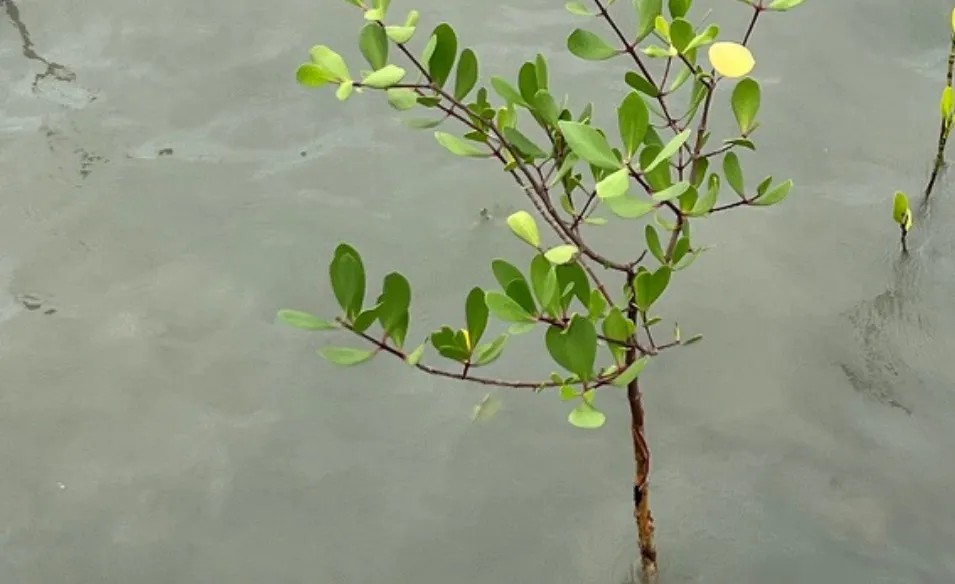
Mangroves
Mangrove Apple
Sonneratia alba
IUCN: LC
Its flowers open at night and are pollinated by bats and moths. Its cone-shaped breathing roots stick up out of the mud.
Mangrove Apple (Sonneratia alba) is a mangrove of the family Sonneratiaceae recorded in the biodiversity data of PRPM Mengare.
It is one of 22 species in the group “Mangroves” recorded at the site.
How to recognise it
- Form
- Medium to large tree, 7–20 m tall, upright trunk with pale grey, often peeling bark.
- Roots
- Cone-shaped pneumatophores, growing densely around the tree to help it breathe.
- Leaves
- Opposite, oblong to ovate, 5–12 cm, thick and fleshy, rounded tip; pale green.
- Flowers
- Large single flowers at the twig tips; white petals with long hanging stamens, opening at night.
- Fruit & seed
- Large round fruit, 5–8 cm across, green, with many small seeds.
Did you know?
Its flowers open at night and are pollinated by bats and moths. The large green fruit is not eaten, unlike that of S. caseolaris, which is often used for rujak or traditional drinks. S. alba usually grows in the front zone of the mangrove, facing the sea.
Video from the site
Quick facts
- Scientific name
- Sonneratia alba
- English name
- Mangrove Apple
- Indonesian name
- Pedada, bogem putih
- Family
- Sonneratiaceae
- Group
- Mangroves
Conservation status
- IUCN Red List
- Least Concern